
After the vidaai, when the car turns into the new lane and the dhol has faded behind her, a bride’s wedding day is still not quite over. The griha pravesh, her first ceremonial step into her new home, is one of the most emotional hours of the entire wedding week. It can happen late at night, at a narrow doorway, with relatives crowding in to watch. That mix of ritual, crowding and low light is exactly why griha pravesh photography deserves its own plan, separate from the main wedding coverage.
This guide walks through the moments worth capturing, how to handle real home lighting, and what families in Indore can do to make the entrance camera-ready before the couple arrives.
The moments a griha pravesh album cannot miss
The ceremony moves quickly and each ritual lasts only moments, so a photographer has to know the sequence before it begins. Families order this ceremony differently, some do the full sequence, some only a short blessing at the door, so we plan for the frames that matter most:
- The welcome aarti at the door, led by a family elder, with the thali held up to the couple
- The bride nudging the kalash of rice with her right foot, and the grains spilling across the threshold
- Her first step inside, right foot first, hands often still joined from the aarti
- The alta footprints on the floor or on a white cloth, a favourite detail shot of the night
- The couple seated for the grah shanti puja, with the family gathered behind them
- Small unscripted moments: a grandmother adjusting the bride’s dupatta, the groom waiting by the door, cousins laughing in the corridor
A good candid wedding photographer will catch most of these without stopping the ceremony even once. Rituals should never be repeated for the camera; the emotion lives in the first take.
Light and space in real Indore homes
Wedding venues are built for cameras. Homes are not. An entry may be scheduled for the evening or well past midnight, and the doorway might be lit by a single tube light, a warm bulb, or a phone torch held by a helpful uncle. Rooms are small, walls are close, and there is rarely space for a light stand.
The practical answer is fast lenses and quiet technique. A photographer working a griha pravesh should be comfortable shooting wide open at f/1.8 or wider, using a small bounce flash only when the family is fine with it, and reading mixed colour temperatures without turning everyone’s faces orange. It is worth walking through the home a day earlier, or at least asking for photos of the entrance, so the light plan is settled before the night itself. This is the same scouting habit we use for bridal entry photography at venues, just applied to a hallway instead of a stage.
Posed or candid: what actually works
Griha pravesh is one ceremony where candid coverage wins almost completely. The aarti, the kalash, the first step: these happen once, in seconds, and any attempt to stage them kills the feeling. Where direction helps is afterwards, once the couple is seated and relaxed. Five calm minutes of family groupings at the end of the puja give grandparents and parents the portraits they will actually frame, and they fit naturally into the same approach we use for family group photos at weddings.
Getting the home camera-ready before the couple arrives
A few small preparations change the photos more than any camera setting:
- Clear the entrance corridor of shoes, bags and extra furniture so the photographer has one clean angle
- Keep the rangoli and flower decor slightly inside the doorway rather than outside it, so it appears in the step-in frame
- Warm string lights near the door photograph far better than a bare tube light overhead
- Ask one family member to gently keep the doorway from crowding during the kalash moment
- Keep the alta plate and the white cloth for footprints ready before the aarti begins, not during
None of this needs a decorator. It needs ten minutes and one person in charge.
Griha pravesh and vidaai are one story
The vidaai and the griha pravesh are two halves of the same evening: leaving one home, entering another. Photographing only one of them tells half the story. When we cover a wedding, we plan the vidaai photography and the griha pravesh as a single continuous sequence, so the album moves from the tears at the gate to the welcome at the new door without a gap. Couples who book a post-wedding shoot often add a short griha pravesh session to it as well, especially when the ceremony itself was too crowded to photograph properly.
If you are building a full wedding-week plan, our wedding photography timeline for Indore shows where griha pravesh fits between the vidaai and the first morning after.
Booking griha pravesh photography in Indore
Griha pravesh coverage is short, usually one to two hours, and works best when it is planned alongside the wedding rather than added at the last minute. At The Wedding Panchnama we photograph the ceremony quietly, without stopping rituals, and deliver the entry sequence, the footprints, the puja and the family portraits as a complete chapter of your wedding story. To check availability for your dates, call us on 9877777695.
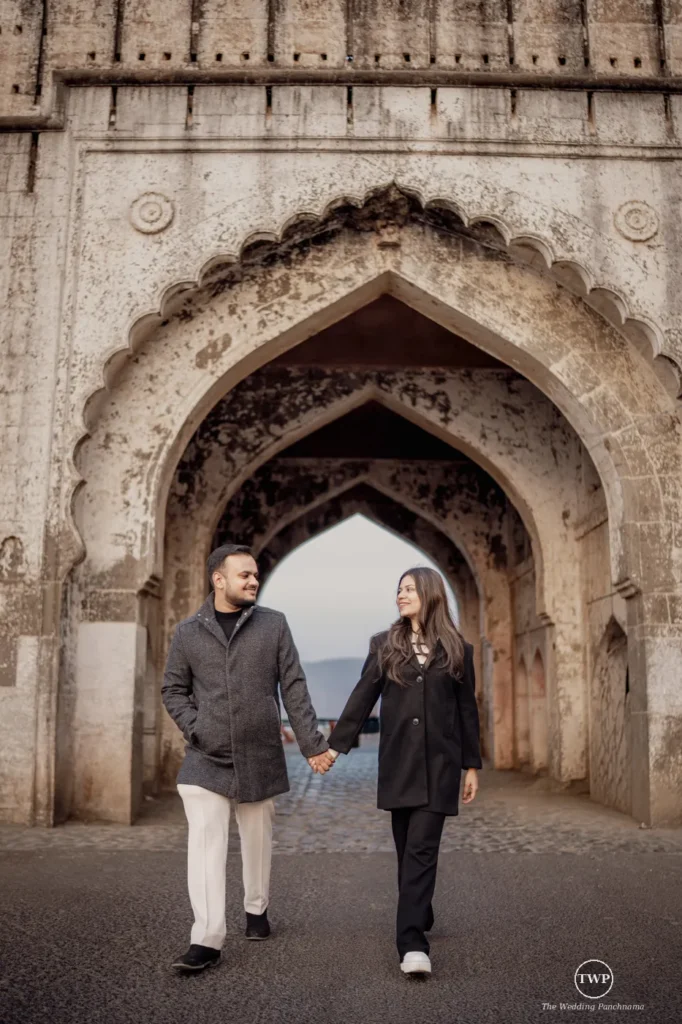
Photo: The Wedding Panchnama.